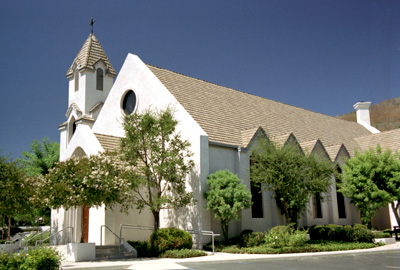
Here's a piece from The Chronicle Review, January 30, 2009, with a completely random photo I took at Valle Crucis Abbey in Wales - a place of solitude and a place associated with tradition. Deresiewicz discussion of solitude, technology, etc. a particularly appropriate article for consideration during the season of Lent. What are your thoughts on solitude?The End of Solitude: As everyone seeks more and broader connectivity, the still, small voice speaks only in silence
 by WILLIAM DERESIEWICZ
What does the contemporary self want? The camera has created a culture of celebrity; the computer is creating a culture of connectivity. As the two technologies converge — broadband tipping the Web from text to image, social-networking sites spreading the mesh of interconnection ever wider — the two cultures betray a common impulse. Celebrity and connectivity are both ways of becoming known. This is what the contemporary self wants. It wants to be recognized, wants to be connected: It wants to be visible. If not to the millions, on Survivor or Oprah, then to the hundreds, on Twitter or Facebook. This is the quality that validates us, this is how we become real to ourselves — by being seen by others. The great contemporary terror is anonymity. If Lionel Trilling was right, if the property that grounded the self, in Romanticism, was sincerity, and in modernism it was authenticity, then in postmodernism it is visibility.
So we live exclusively in relation to others, and what disappears from our lives is solitude. Technology is taking away our privacy and our concentration, but it is also taking away our ability to be alone. Though I shouldn't say taking away. We are doing this to ourselves; we are discarding these riches as fast as we can. I was told by one of her older relatives that a teenager I know had sent 3,000 text messages one recent month. That's 100 a day, or about one every 10 waking minutes, morning, noon, and night, weekdays and weekends, class time, lunch time, homework time, and toothbrushing time. So on average, she's never alone for more than 10 minutes at once. Which means, she's never alone.
I once asked my students about the place that solitude has in their lives. One of them admitted that she finds the prospect of being alone so unsettling that she'll sit with a friend even when she has a paper to write. Another said, why would anyone want to be alone?
To that remarkable question, history offers a number of answers. Man may be a social animal, but solitude has traditionally been a societal value. In particular, the act of being alone has been understood as an essential dimension of religious experience, albeit one restricted to a self-selected few. Through the solitude of rare spirits, the collective renews its relationship with divinity. The prophet and the hermit, the sadhu and the yogi, pursue their vision quests, invite their trances, in desert or forest or cave. For the still, small voice speaks only in silence. Social life is a bustle of petty concerns, a jostle of quotidian interests, and religious institutions are no exception. You cannot hear God when people are chattering at you, and the divine word, their pretensions notwithstanding, demurs at descending on the monarch and the priest. Communal experience is the human norm, but the solitary encounter with God is the egregious act that refreshes that norm. (Egregious, for no man is a prophet in his own land. Tiresias was reviled before he was vindicated, Teresa interrogated before she was canonized.) Religious solitude is a kind of self-correcting social mechanism, a way of burning out the underbrush of moral habit and spiritual custom. The seer returns with new tablets or new dances, his face bright with the old truth.
Like other religious values, solitude was democratized by the Reformation and secularized by Romanticism. In Marilynne Robinson's interpretation, Calvinism created the modern self by focusing the soul inward, leaving it to encounter God, like a prophet of old, in "profound isolation." To her enumeration of Calvin, Marguerite de Navarre, and Milton as pioneering early-modern selves we can add Montaigne, Hamlet, and even Don Quixote. The last figure alerts us to reading's essential role in this transformation, the printing press serving an analogous function in the 16th and subsequent centuries to that of television and the Internet in our own. Reading, as Robinson puts it, "is an act of great inwardness and subjectivity." "The soul encountered itself in response to a text, first Genesis or Matthew and then Paradise Lost or Leaves of Grass." With Protestantism and printing, the quest for the divine voice became available to, even incumbent upon, everyone.
But it is with Romanticism that solitude achieved its greatest cultural salience, becoming both literal and literary. Protestant solitude is still only figurative. Rousseau and Wordsworth made it physical. The self was now encountered not in God but in Nature, and to encounter Nature one had to go to it. And go to it with a special sensibility: The poet displaced the saint as social seer and cultural model. But because Romanticism also inherited the 18th-century idea of social sympathy, Romantic solitude existed in a dialectical relationship with sociability — if less for Rousseau and still less for Thoreau, the most famous solitary of all, then certainly for Wordsworth, Melville, Whitman, and many others. For Emerson, "the soul environs itself with friends, that it may enter into a grander self-acquaintance or solitude; and it goes alone, for a season, that it may exalt its conversation or society." The Romantic practice of solitude is neatly captured by Trilling's "sincerity": the belief that the self is validated by a congruity of public appearance and private essence, one that stabilizes its relationship with both itself and others. Especially, as Emerson suggests, one beloved other. Hence the famous Romantic friendship pairs: Goethe and Schiller, Wordsworth and Coleridge, Hawthorne and Melville.
Modernism decoupled this dialectic. Its notion of solitude was harsher, more adversarial, more isolating. As a model of the self and its interactions, Hume's social sympathy gave way to Pater's thick wall of personality and Freud's narcissism — the sense that the soul, self-enclosed and inaccessible to others, can't choose but be alone. With exceptions, like Woolf, the modernists fought shy of friendship. Joyce and Proust disparaged it; D.H. Lawrence was wary of it; the modernist friendship pairs — Conrad and Ford, Eliot and Pound, Hemingway and Fitzgerald — were altogether cooler than their Romantic counterparts. The world was now understood as an assault on the self, and with good reason.
The Romantic ideal of solitude developed in part as a reaction to the emergence of the modern city. In modernism, the city is not only more menacing than ever, it has become inescapable, a labyrinth: Eliot's London, Joyce's Dublin. The mob, the human mass, presses in. Hell is other people. The soul is forced back into itself — hence the development of a more austere, more embattled form of self-validation, Trilling's "authenticity," where the essential relationship is only with oneself. (Just as there are few good friendships in modernism, so are there few good marriages.) Solitude becomes, more than ever, the arena of heroic self-discovery, a voyage through interior realms made vast and terrifying by Nietzschean and Freudian insights. To achieve authenticity is to look upon these visions without flinching; Trilling's exemplar here is Kurtz. Protestant self-examination becomes Freudian analysis, and the culture hero, once a prophet of God and then a poet of Nature, is now a novelist of self — a Dostoyevsky, a Joyce, a Proust.
But we no longer live in the modernist city, and our great fear is not submersion by the mass but isolation from the herd. Urbanization gave way to suburbanization, and with it the universal threat of loneliness. What technologies of transportation exacerbated — we could live farther and farther apart — technologies of communication redressed — we could bring ourselves closer and closer together. Or at least, so we have imagined. The first of these technologies, the first simulacrum of proximity, was the telephone. "Reach out and touch someone." But through the 70s and 80s, our isolation grew. Suburbs, sprawling ever farther, became exurbs. Families grew smaller or splintered apart, mothers left the home to work. The electronic hearth became the television in every room. Even in childhood, certainly in adolescence, we were each trapped inside our own cocoon. Soaring crime rates, and even more sharply escalating rates of moral panic, pulled children off the streets. The idea that you could go outside and run around the neighborhood with your friends, once unquestionable, has now become unthinkable. The child who grew up between the world wars as part of an extended family within a tight-knit urban community became the grandparent of a kid who sat alone in front of a big television, in a big house, on a big lot. We were lost in space.
Under those circumstances, the Internet arrived as an incalculable blessing. We should never forget that. It has allowed isolated people to communicate with one another and marginalized people to find one another. The busy parent can stay in touch with far-flung friends. The gay teenager no longer has to feel like a freak. But as the Internet's dimensionality has grown, it has quickly become too much of a good thing. Ten years ago we were writing e-mail messages on desktop computers and transmitting them over dial-up connections. Now we are sending text messages on our cellphones, posting pictures on our Facebook pages, and following complete strangers on Twitter. A constant stream of mediated contact, virtual, notional, or simulated, keeps us wired in to the electronic hive — though contact, or at least two-way contact, seems increasingly beside the point. The goal now, it seems, is simply to become known, to turn oneself into a sort of miniature celebrity. How many friends do I have on Facebook? How many people are reading my blog? How many Google hits does my name generate? Visibility secures our self-esteem, becoming a substitute, twice removed, for genuine connection. Not long ago, it was easy to feel lonely. Now, it is impossible to be alone.
As a result, we are losing both sides of the Romantic dialectic. What does friendship mean when you have 532 "friends"? How does it enhance my sense of closeness when my Facebook News Feed tells me that Sally Smith (whom I haven't seen since high school, and wasn't all that friendly with even then) "is making coffee and staring off into space"? My students told me they have little time for intimacy. And of course, they have no time at all for solitude.
But at least friendship, if not intimacy, is still something they want. As jarring as the new dispensation may be for people in their 30s and 40s, the real problem is that it has become completely natural for people in their teens and 20s. Young people today seem to have no desire for solitude, have never heard of it, can't imagine why it would be worth having. In fact, their use of technology — or to be fair, our use of technology — seems to involve a constant effort to stave off the possibility of solitude, a continuous attempt, as we sit alone at our computers, to maintain the imaginative presence of others. As long ago as 1952, Trilling wrote about "the modern fear of being cut off from the social group even for a moment." Now we have equipped ourselves with the means to prevent that fear from ever being realized. Which does not mean that we have put it to rest. Quite the contrary. Remember my student, who couldn't even write a paper by herself. The more we keep aloneness at bay, the less are we able to deal with it and the more terrifying it gets.
There is an analogy, it seems to me, with the previous generation's experience of boredom. The two emotions, loneliness and boredom, are closely allied. They are also both characteristically modern. The Oxford English Dictionary's earliest citations of either word, at least in the contemporary sense, date from the 19th century. Suburbanization, by eliminating the stimulation as well as the sociability of urban or traditional village life, exacerbated the tendency to both. But the great age of boredom, I believe, came in with television, precisely because television was designed to palliate that feeling. Boredom is not a necessary consequence of having nothing to do, it is only the negative experience of that state. Television, by obviating the need to learn how to make use of one's lack of occupation, precludes one from ever discovering how to enjoy it. In fact, it renders that condition fearsome, its prospect intolerable. You are terrified of being bored — so you turn on the television.
I speak from experience. I grew up in the 60s and 70s, the age of television. I was trained to be bored; boredom was cultivated within me like a precious crop. (It has been said that consumer society wants to condition us to feel bored, since boredom creates a market for stimulation.) It took me years to discover — and my nervous system will never fully adjust to this idea; I still have to fight against boredom, am permanently damaged in this respect — that having nothing to do doesn't have to be a bad thing. The alternative to boredom is what Whitman called idleness: a passive receptivity to the world.
So it is with the current generation's experience of being alone. That is precisely the recognition implicit in the idea of solitude, which is to loneliness what idleness is to boredom. Loneliness is not the absence of company, it is grief over that absence. The lost sheep is lonely; the shepherd is not lonely. But the Internet is as powerful a machine for the production of loneliness as television is for the manufacture of boredom. If six hours of television a day creates the aptitude for boredom, the inability to sit still, a hundred text messages a day creates the aptitude for loneliness, the inability to be by yourself. Some degree of boredom and loneliness is to be expected, especially among young people, given the way our human environment has been attenuated. But technology amplifies those tendencies. You could call your schoolmates when I was a teenager, but you couldn't call them 100 times a day. You could get together with your friends when I was in college, but you couldn't always get together with them when you wanted to, for the simple reason that you couldn't always find them. If boredom is the great emotion of the TV generation, loneliness is the great emotion of the Web generation. We lost the ability to be still, our capacity for idleness. They have lost the ability to be alone, their capacity for solitude.
And losing solitude, what have they lost? First, the propensity for introspection, that examination of the self that the Puritans, and the Romantics, and the modernists (and Socrates, for that matter) placed at the center of spiritual life — of wisdom, of conduct. Thoreau called it fishing "in the Walden Pond of [our] own natures," "bait[ing our] hooks with darkness." Lost, too, is the related propensity for sustained reading. The Internet brought text back into a televisual world, but it brought it back on terms dictated by that world — that is, by its remapping of our attention spans. Reading now means skipping and skimming; five minutes on the same Web page is considered an eternity. This is not reading as Marilynne Robinson described it: the encounter with a second self in the silence of mental solitude.
But we no longer believe in the solitary mind. If the Romantics had Hume and the modernists had Freud, the current psychological model — and this should come as no surprise — is that of the networked or social mind. Evolutionary psychology tells us that our brains developed to interpret complex social signals. According to David Brooks, that reliable index of the social-scientific zeitgeist, cognitive scientists tell us that "our decision-making is powerfully influenced by social context"; neuroscientists, that we have "permeable minds" that function in part through a process of "deep imitation"; psychologists, that "we are organized by our attachments"; sociologists, that our behavior is affected by "the power of social networks." The ultimate implication is that there is no mental space that is not social (contemporary social science dovetailing here with postmodern critical theory). One of the most striking things about the way young people relate to one another today is that they no longer seem to believe in the existence of Thoreau's "darkness."
The MySpace page, with its shrieking typography and clamorous imagery, has replaced the journal and the letter as a way of creating and communicating one's sense of self. The suggestion is not only that such communication is to be made to the world at large rather than to oneself or one's intimates, or graphically rather than verbally, or performatively rather than narratively or analytically, but also that it can be made completely. Today's young people seem to feel that they can make themselves fully known to one another. They seem to lack a sense of their own depths, and of the value of keeping them hidden.
If they didn't, they would understand that solitude enables us to secure the integrity of the self as well as to explore it. Few have shown this more beautifully than Woolf. In the middle of Mrs. Dalloway, between her navigation of the streets and her orchestration of the party, between the urban jostle and the social bustle, Clarissa goes up, "like a nun withdrawing," to her attic room. Like a nun: She returns to a state that she herself thinks of as a kind of virginity. This does not mean she's a prude. Virginity is classically the outward sign of spiritual inviolability, of a self untouched by the world, a soul that has preserved its integrity by refusing to descend into the chaos and self-division of sexual and social relations. It is the mark of the saint and the monk, of Hippolytus and Antigone and Joan of Arc. Solitude is both the social image of that state and the means by which we can approximate it. And the supreme image in Mrs. Dalloway of the dignity of solitude itself is the old woman whom Clarissa catches sight of through her window. "Here was one room," she thinks, "there another." We are not merely social beings. We are each also separate, each solitary, each alone in our own room, each miraculously our unique selves and mysteriously enclosed in that selfhood.
To remember this, to hold oneself apart from society, is to begin to think one's way beyond it. Solitude, Emerson said, "is to genius the stern friend." "He who should inspire and lead his race must be defended from traveling with the souls of other men, from living, breathing, reading, and writing in the daily, time-worn yoke of their opinions." One must protect oneself from the momentum of intellectual and moral consensus — especially, Emerson added, during youth. "God is alone," Thoreau said, "but the Devil, he is far from being alone; he sees a great deal of company; he is legion." The university was to be praised, Emerson believed, if only because it provided its charges with "a separate chamber and fire" — the physical space of solitude. Today, of course, universities do everything they can to keep their students from being alone, lest they perpetrate self-destructive acts, and also, perhaps, unfashionable thoughts. But no real excellence, personal or social, artistic, philosophical, scientific or moral, can arise without solitude. "The saint and poet seek privacy," Emerson said, "to ends the most public and universal." We are back to the seer, seeking signposts for the future in splendid isolation.
Solitude isn't easy, and isn't for everyone. It has undoubtedly never been the province of more than a few. "I believe," Thoreau said, "that men are generally still a little afraid of the dark." Teresa and Tiresias will always be the exceptions, or to speak in more relevant terms, the young people — and they still exist — who prefer to loaf and invite their soul, who step to the beat of a different drummer. But if solitude disappears as a social value and social idea, will even the exceptions remain possible? Still, one is powerless to reverse the drift of the culture. One can only save oneself — and whatever else happens, one can still always do that. But it takes a willingness to be unpopular.
The last thing to say about solitude is that it isn't very polite. Thoreau knew that the "doubleness" that solitude cultivates, the ability to stand back and observe life dispassionately, is apt to make us a little unpleasant to our fellows, to say nothing of the offense implicit in avoiding their company. But then, he didn't worry overmuch about being genial. He didn't even like having to talk to people three times a day, at meals; one can only imagine what he would have made of text-messaging. We, however, have made of geniality — the weak smile, the polite interest, the fake invitation — a cardinal virtue. Friendship may be slipping from our grasp, but our friendliness is universal. Not for nothing does "gregarious" mean "part of the herd." But Thoreau understood that securing one's self-possession was worth a few wounded feelings. He may have put his neighbors off, but at least he was sure of himself. Those who would find solitude must not be afraid to stand alone.
William Deresiewicz writes essays and reviews for a variety of publications. He taught at Yale University from 1998 to 2008.
http://chronicle.com
Section: The Chronicle Review
Volume 55, Issue 21, Page B6